[ad_1]
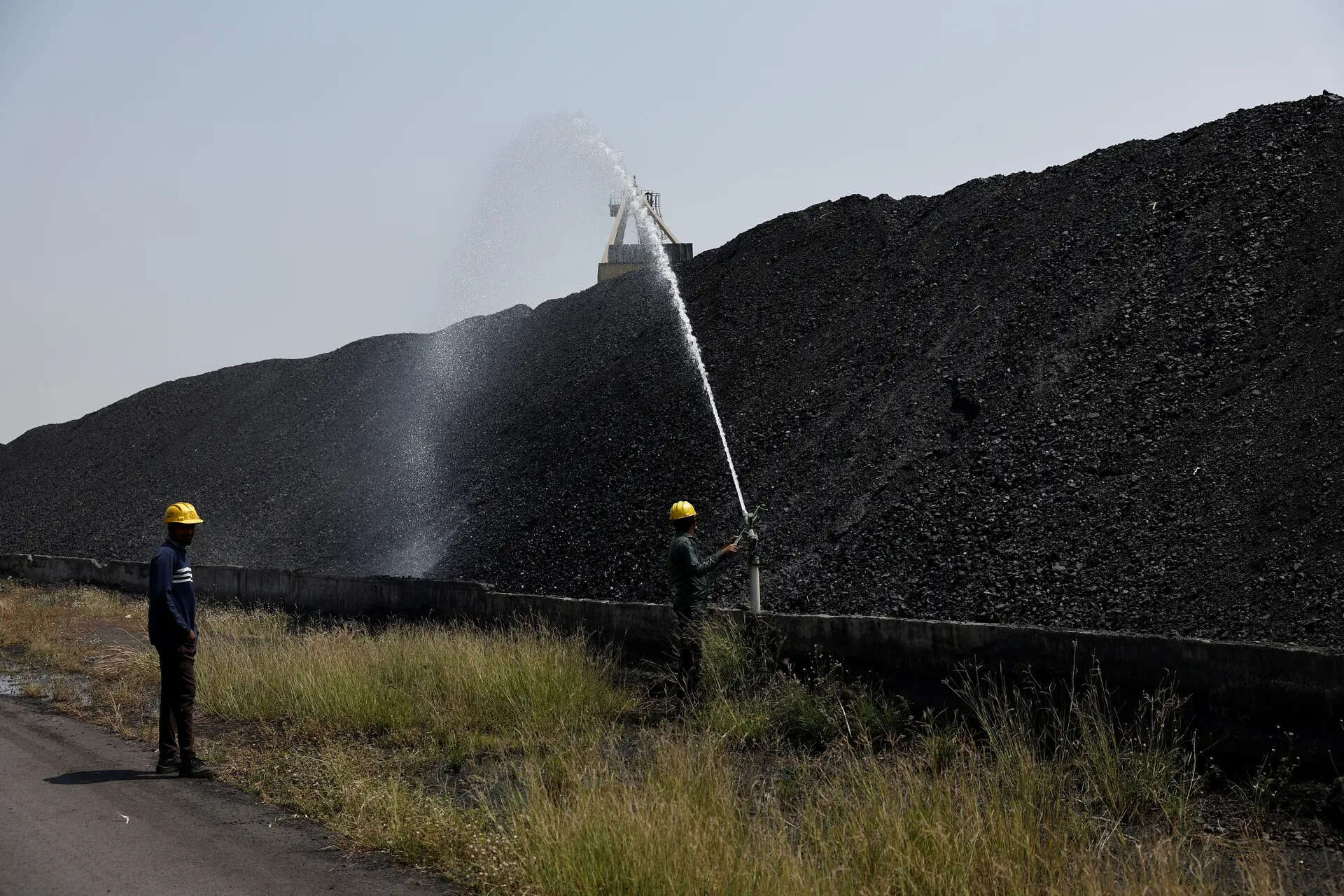
Bharat Coking Coal Ltd (BCCL), a key subsidiary of Coal India, has said it will fund its ambitious growth and modernisation plans entirely through internal cash flows, even as its recent initial public offering (IPO) was structured as a pure offer-for-sale (OFS) with proceeds accruing to the parent company.
Speaking to ET Now, Mukesh Agrawal, Director (Finance), Coal India, said BCCL’s projected profitability provides sufficient financial headroom to support its capital expenditure plans. From FY27 onwards, BCCL expects annual profits of over ₹2,000 crore, along with depreciation of ₹400–500 crore, translating into cash availability of around ₹2,500 crore every year.
“Against this, our annual capex requirement is only about ₹1,000 crore over the next five years. So BCCL can comfortably fund its growth programme through earnings without external borrowing,” Agrawal said.
Budget expectations: Steel sector in focus
On expectations from the Union Budget, Agrawal said that long-pending GST-related issues affecting the coal sector had already been addressed in September 2025 and that continuity of these provisions would support the industry.
Sanjay Kumar Singh of BCCL added that the company is keenly watching potential budgetary support for the steel sector, which is BCCL’s largest customer base. “Any boost to steel will directly lift demand for coking coal,” he said.
Customer concentration to ease with output expansion
Currently, more than 80 per cent of BCCL’s revenue comes from its top 10 customers, largely public sector steel and power companies. CMD Manoj Kumar Agarwal said this concentration will reduce as production ramps up.
BCCL currently produces around 40.5 million tonnes of coal annually and plans to raise output to 56 million tonnes by 2030. The company accounts for nearly 58.5 per cent of India’s coking coal production, making it critical to the domestic steel industry.
“With higher output, we will fully meet the requirements of Steel Authority of India Ltd (SAIL) and then expand sales to private steel players through auctions,” Agarwal said, adding that domestic sourcing also helps customers save significantly on logistics costs.
BCCL is also diversifying beyond coal through coal bed methane (CBM) projects and renewable energy. A CBM project at Moonidih is at an advanced stage, with commercial methane production expected in about 18 months. The company is also investing in solar power installations.
Coal washing to drive margins sharply higher
A major margin driver for BCCL over the next five years will be the expansion of coal washing capacity. Singh said the company plans to nearly double its washery capacity from the current 13–13.6 million tonnes.
Processing coal through washeries significantly enhances value. “If one tonne of raw coal is washed, the combined realisation from washed coking coal, power coal and by-products is almost three times what we earn from selling raw coal,” Singh said.
Under BCCL’s five-year plan, around 16 million tonnes of coal will be routed through washeries annually. Agarwal said this could translate into incremental profits of ₹1,200–1,500 per tonne, materially lifting margins.
EBITDA dip seen as temporary
BCCL reported a sharp year-on-year decline in EBITDA in H1 FY26. Management attributed this to exceptional weather conditions rather than structural issues.
Singh said the Dhanbad region witnessed rainfall of around 2,200 mm—nearly double the normal level—making it the wettest year in five decades and severely disrupting opencast mining. Additionally, a milder summer reduced peak coal demand.
“These are one-off factors. From next year, we expect normalisation in output and offtake, supported by stronger steel demand,” he said.
Agrawal added that mining is a high fixed-cost business, with nearly 70 per cent of costs fixed. Any disruption in volumes therefore has a disproportionate impact on profitability.
Subsidiary listings to unlock value
Coal India is also pursuing listings of other subsidiaries, including CMPDI, its consulting arm, for which draft papers have already been filed. Agrawal said BCCL and CMPDI were prioritised because their distinct business models—coking coal and consultancy—were not being adequately valued within Coal India’s consolidated structure.
“The idea is to unlock intrinsic value and ensure that strong performers are not dragged down by weaker ones,” he said, adding that partial listings of other subsidiaries could follow over time to improve transparency and shareholder value.
Overall, BCCL sees a clear runway for growth, margin expansion and diversification, driven by internal cash generation, higher-value washed coal, and rising demand from India’s steel sector.

[ad_2]
Source link