[ad_1]
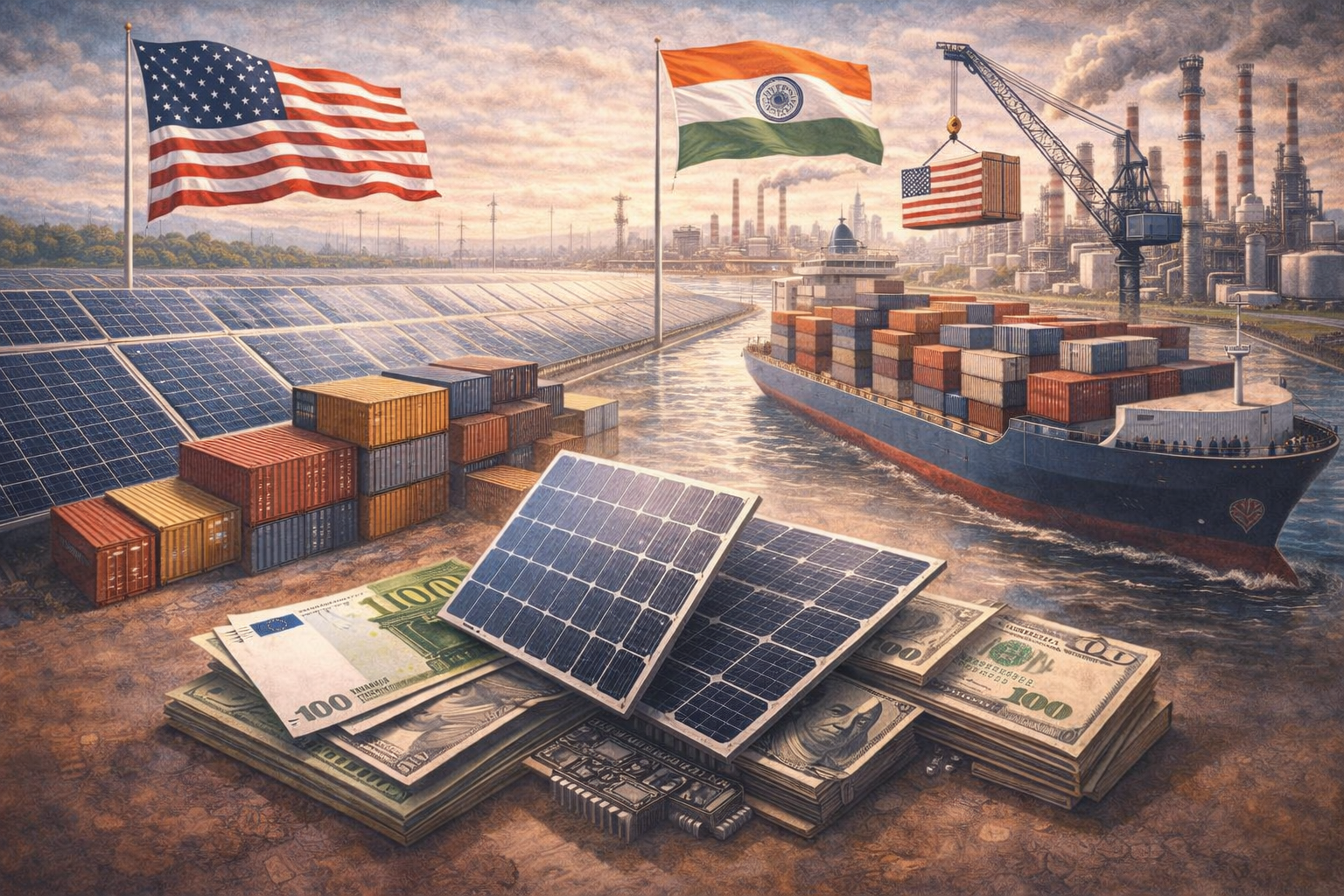
The India-US trade deal which includes tariff relief on Indian exports and a proposed shift away from Russian crude purchases could boost export competitiveness for solar products and provide greater flexibility for India’s oil and energy sector, according to industry experts.
Prashant Vasisht, senior vice-president and co-group head, corporate ratings, ICRA, said that the replacement of Russian crude with market priced crude would lead to an increase in the import bill of the country by less than 2 per cent.
“Venezuelan crudes are heavy and sour and therefore cheaper and would be of interest to Indian refiners, many of whom can process these types of crudes,” he said citing ICRA estimates.
The discounts on Russian crude oil were marginal prior to the US announcing sanctions on some Russian crude suppliers in October 2025, according to experts. “For the Indian refining sector, there are ample avenues including the US, to purchase crude as Russian crude accounted for less than 2 per cent of Indian crude imports prior to FY23,” said Vasisht.
The announcement of the US-India trade deal reportedly includes lowering the 25 per cent penal tariffs on India to 18 per cent, with the latter agreeing to stop purchase of crude oil from Russia, according to US President Donald Trump.
Reuters on Tuesday reported that Indian refiners are reportedly winding down existing Russian contracts but no official government order has been issued yet.
“Indian energy and cleantech exports to the US have always played an instrumental role to the industry and this agreement enhances our global competitiveness by improving price efficiency, certainty of access, and long-term demand visibility,” said Gyanesh Chaudhary, Chairman & Managing Director, Vikram Solar.
Prashant Mathur, CEO of Saatvik Green Energy, said that the US decision to reduce tariffs on Indian goods represents a strategic turning point for the solar sector, rather than just a routine policy change.
“The seven-percentage-point reduction in tariffs enhances the cost-competitiveness of Indian-made solar cells and modules. This improvement will make projects more profitable for US developers and create a substantial new demand for high-efficiency, Made-in-India products in the coming years,” he said.
He said that this change also strengthens the case for supply chains that are open and reliable as it alleviates long-standing concerns about Chinese producers circumventing tariffs.
The agreement follows more than five months after Washington introduced sharp tariffs on a range of Indian goods, including a 25 per cent levy tied to India’s purchase of Russian oil.
“I spoke with Prime Minister Modi this morning. He agreed to stop buying Russian oil and buy more from the United States. We reached a trade deal cutting US tariffs from 25 per cent to 18 per cent, while India will reduce its barriers to zero and ‘buy American’ at a higher level. Our relationship with India will be even stronger going forward,” Trump wrote.
Prime Minister Narendra Modi on X wrote, “It was wonderful to speak with President Trump. I am delighted that Made in India products will now face a reduced tariff of 18 per cent. When our two great democracies work together, it creates immense opportunities. India fully supports his efforts for peace, and I look forward to taking our partnership to new heights”.
India and the US began BTA negotiations in March and have held around six rounds of talks so far. The most recent informal discussions were held in New Delhi in December, during a visit by a US trade delegation led by the deputy US Trade Representative.
Talks were later put on hold over the year-end holidays, after missing the fall deadline and amid uncertainty over finalising the agreement. Since then, both sides have continued discussions virtually.

[ad_2]
Source link